The air is crisp, the leaves are turning, and there’s a certain thrill pulsing through the season as Halloween approaches. For many, it’s a time for costumes, candy, and embracing a little playful fear. But in the world of business and personal growth, there’s a much more insidious, truly terrifying monster that lurks in the shadows: the myth of perfection.
It’s the phantom that whispers doubts, paralyzes action, and ultimately holds countless professionals and entrepreneurs hostage. The fear of imperfection isn’t just about wanting to do well; it’s a deep-seated anxiety that stops you from starting, prevents you from finishing, and keeps you from evolving. It’s the silent killer of innovation, progress, and often, well-being.
As someone who has navigated the demanding landscapes of various professional environments, I understand this pursuit of perfection intimately. My previous career as an Air Traffic Controller, in particular, was one where precision wasn’t just admired; it was absolutely essential. Every detail, every calculation, every decision had to be flawless. It was a world that, by its very nature, ingrained a profound commitment to accuracy and an almost innate aversion to error.
Stepping away from that world and into new ventures, especially into the dynamic and often ambiguous realm of business coaching and virtual solutions, I quickly realized that the ingrained mindset of perfection, while valuable in its original context, could become a significant roadblock. It was incredibly difficult to shed the expectation that everything I presented, every service I offered, every new strategy I proposed, had to be impeccably, unimpeachably perfect from the outset.
And honestly? It’s still something I actively work on. When I venture into a new area of business, launch a new program, or even draft a seemingly simple proposal, that old whisper of “it’s not perfect enough” can still creep in. It’s a testament to how deeply ingrained this fear can become, especially coming from a background where mistakes as an Air Traffic Controller simply were not an option.
But here’s the crucial insight: in business, and in life, striving for perfection is often a journey to nowhere. Progress, not perfection, is the true catalyst for success.
The Devastating Impact of the Perfection Myth
Before we dive into how to conquer this fear, let’s truly understand its impact. What does the myth of perfection cost you?
Procrastination and Paralysis: You delay starting projects, endlessly tweaking and refining, fearing that your initial effort won’t be good enough. This leads to missed deadlines and lost opportunities.
Stifled Innovation: The need for perfection often means sticking to what’s safe and known, rather than experimenting with new ideas that carry the inherent risk of not being flawless.
Burnout and Stress: The relentless pursuit of an unattainable ideal leads to overwork, anxiety, and exhaustion. You invest disproportionate time and energy into minor details, neglecting the bigger picture.
Missed Opportunities: In fast-paced markets, “done is better than perfect.” Waiting for the ‘perfect’ launch means someone else might seize the market share.
Low Self-Esteem: Constantly falling short of an impossible standard erodes your confidence and makes you question your capabilities.
Resistance to Feedback: If your work is perceived as an extension of yourself, any critique, no matter how constructive, can feel like a personal attack.
Inability to Delegate: The belief that no one else can do it “perfectly enough” leads to micromanagement and prevents team growth.
Understanding these costs is the first step. The second is actively engaging in strategies to disarm this terrifying monster.
Conquering the Fear of Imperfection: A Coach’s Arsenal
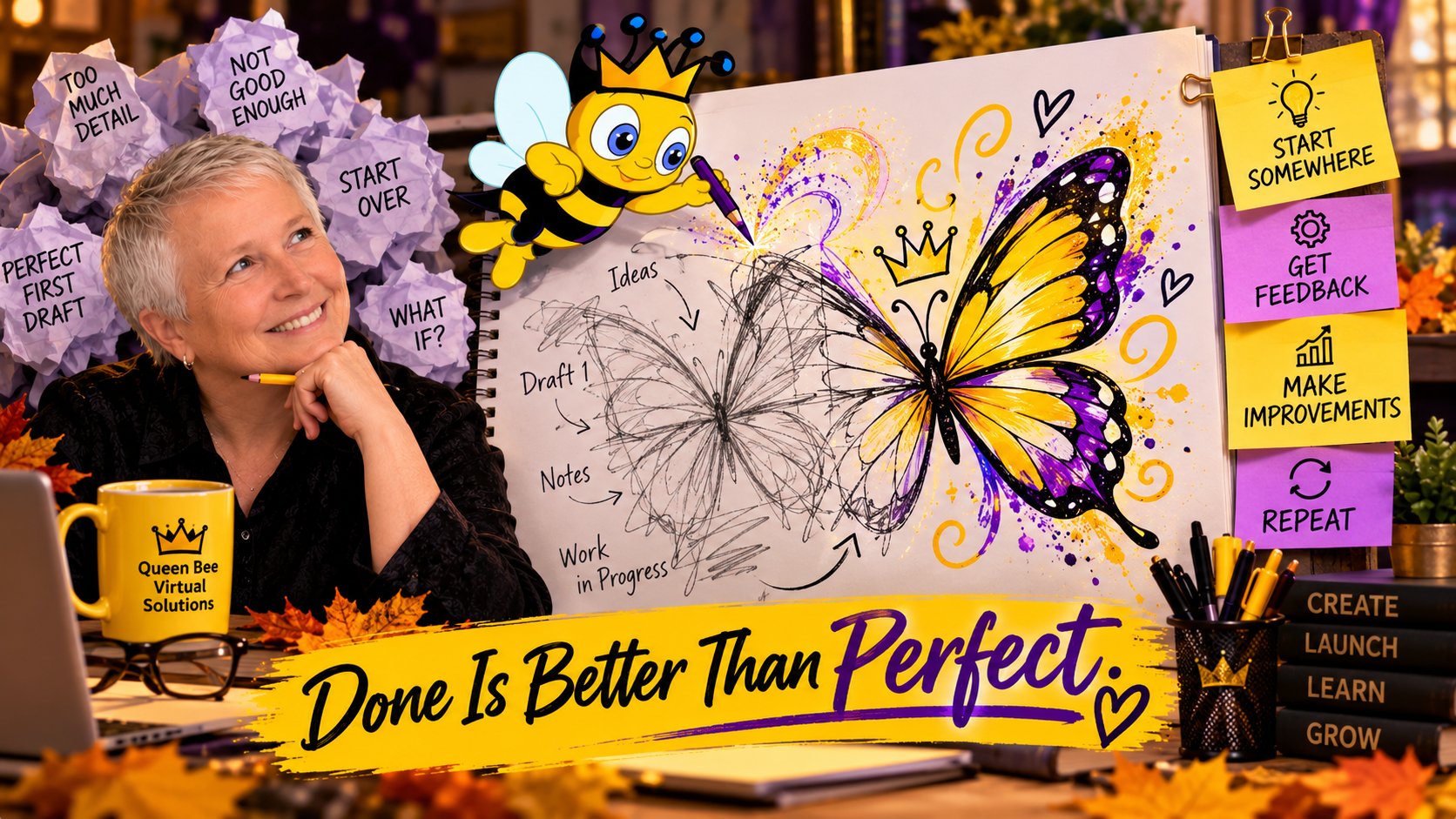
Conquering the fear of imperfection isn’t about lowering your standards; it’s about shifting your perspective from an all-or-nothing mindset to one of continuous improvement, experimentation, and resilience. It’s about recognizing that “good enough” is often the launchpad for “great.”
Here are actionable strategies, complete with vivid examples, to help you reclaim your productivity, creativity, and peace of mind:
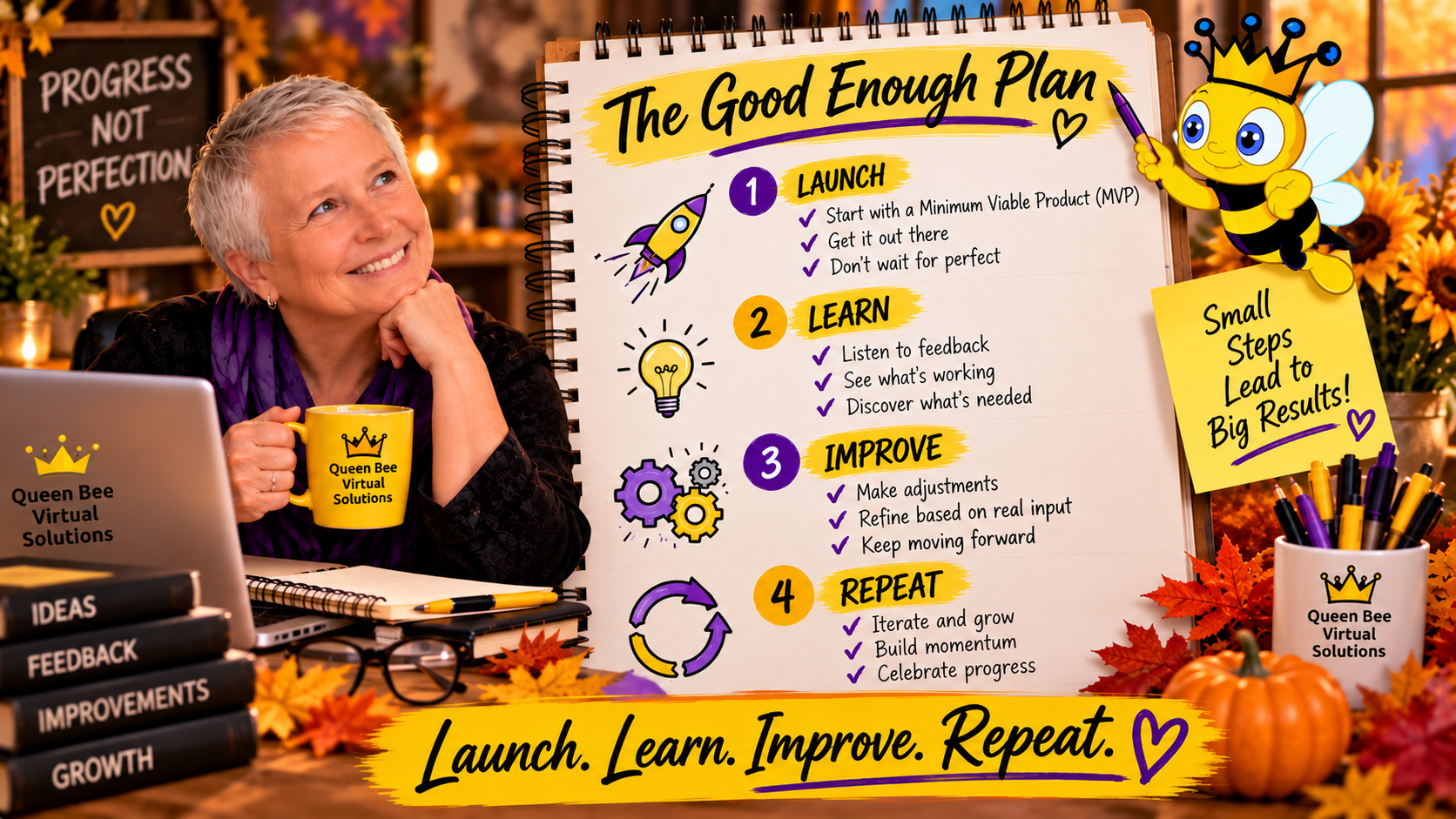
1. Embrace the “Minimum Viable Product” (MVP) Mindset
This concept, popularized in the startup world, is a game-changer. An MVP is the version of a new product or service that allows a team to collect the maximum amount of validated learning about customers with the least effort. It’s about getting something out there to test and gather feedback, rather than waiting for a fully polished, potentially misdirected, final product.
- Example 1: The Fearless Course Creator. Imagine you’re a coach wanting to launch an online course. The perfectionist voice says, “It needs professional video production, a custom-designed website, 50 modules, and a comprehensive workbook before anyone sees it!” The MVP mindset says, “I’ll create a single, core module as a live webinar, record it, and offer it to a small beta group for feedback. I’ll use a simple landing page and basic slides.” This allows you to validate the core content and gauge interest before investing thousands of hours and dollars into something that might not resonate. You’re trading the risk of a perfect but irrelevant product for the certainty of iterative improvement based on real user needs.
- Example 2: The Evolving Software Update. A software company could spend years developing the “perfect” new version, only to find market needs have shifted. Instead, they release incremental updates (MVP-style) every few weeks. Version 1.0 has core features. Version 1.1 adds a requested integration. Version 1.2 refines the user interface based on feedback. Each iteration isn’t perfect, but it’s better, and critically, it’s in use and providing value while it evolves.
2. Redefine “Failure” as “Learning”
This is a fundamental mindset shift. In a perfectionist’s world, failure is an absolute, an ending. In a growth-oriented mindset, failure is simply data—information that tells you what didn’t work, guiding you toward what might.
- Example 1: The Recipe for Resilience. A chef trying to create a new signature dish doesn’t nail it on the first try. They don’t throw away their apron and declare themselves a failure. Instead, they taste, adjust the seasoning, alter the cooking time, swap out an ingredient. Each “failed” attempt is a step closer to the masterpiece. They learn from the bitter, the bland, the burnt. Your “failures” are just ingredients for your next success.
3. Set Time Limits (Even for Brainstorming!)
The fear of imperfection loves open-ended tasks. It thrives when there’s no deadline, allowing for endless tweaking. Impose strict time limits on tasks, and stick to them. This forces you to prioritize completion over endless refinement.
- Example 1: The 60-Minute Blog Post. Instead of spending days trying to write the “perfect” blog post, commit to writing a draft in 60 minutes. Get all your ideas down, messy as they may be. Then, allocate another 30 minutes for a quick edit. The goal isn’t literary perfection, but getting your message out. You’ll likely find that a “good enough” post published quickly generates more engagement than a “perfect” one that never sees the light of day.
4. Practice “Good Enough” Deliberately
This is about consciously allowing yourself to release work that meets the necessary criteria without being flawless. It requires trust in your judgment and a willingness to be vulnerable.
- Example 1: The “Launch & Learn” Website. Instead of waiting for a perfectly designed, content-rich website, launch a professional but basic one with core information. As you interact with clients and gain clarity, you can continuously add pages, refine text, and improve the design. The “good enough” site allows you to start serving clients now, rather than indefinitely delaying your business. It becomes a living, breathing entity that evolves with your business, rather than a static monument to unattainable perfection.
5. Seek and Embrace Constructive Feedback Early and Often
A perfectionist often avoids feedback because it highlights imperfections. Counter this by actively soliciting feedback from trusted sources before you consider something “finished.” This reframes feedback as a tool for improvement, not an indictment of your worth.
- Example 1: The Beta Reader’s Gift. An author writes the first draft of a book. Instead of meticulously polishing it for months alone, they send it to a few trusted beta readers with a clear prompt: “What’s confusing? What bores you? What’s missing?” The early, raw feedback allows them to course-correct significantly before investing more time in refining potentially flawed elements. They embrace the “ugliness” of the first draft, knowing it’s a necessary step toward beauty.
6. Focus on the Impact, Not Just the Output
Shift your attention from the flawlessness of the deliverable to the tangible results it creates. What problem does it solve? What value does it add? If it achieves its purpose, its minor imperfections become insignificant.
- New Example: The Coaching Session Blueprint. A coach is preparing to launch a new, highly specialized one-on-one session series. They know the presentation slides and supporting materials aren’t as graphically polished as they’d like—they were put together quickly to start the first round of sessions. However, the core methodology—the sequence of questions and the exercises—is sound and directly addresses the clients’ most painful problems. The coach proceeds, focusing fiercely on delivering the transformative dialogue and the core value, knowing that the clients are paying for the breakthrough, not the background graphics. The high impact of the session entirely eclipses the minor flaws in the aesthetics.

7. Cultivate Self-Compassion and Self-Care
The relentless pursuit of perfection is often fueled by harsh self-criticism. Counter this by practicing self-compassion. Understand that you are human, mistakes are inevitable, and your worth is not tied to your flawless performance. Regular self-care practices (mindfulness, breaks, hobbies) can also reduce the anxiety that drives perfectionism.
- New Example: The Weekend Detox for the Former ATC. Imagine a former Air Traffic Controller launching a new business who finds themselves over-analyzing every single social media post and email newsletter, spending four hours on a task that should take 30 minutes. They recognize this is the old, hyper-vigilant mindset at work. They deliberately institute a “Weekend Detox” rule: no business-related work or checking emails between Saturday morning and Monday morning. This forced break, this act of self-care, doesn’t make their emails perfect, but it restores the mental reserve needed to prioritize effectively during the week, showing them that the world (and their business) will not crash if they allow themselves to rest and release control.
The Journey Beyond Perfection
Conquering the fear of imperfection is not a one-time battle; it’s an ongoing journey. It requires constant vigilance, intentional practice, and a compassionate understanding of your own deeply ingrained patterns.
Remember my own journey: moving from a career demanding absolute precision as an Air Traffic Controller to one that thrives on adaptability and iteration. The old mindset still tries to surface, especially when venturing into unfamiliar territory. But recognizing it is the first step. Applying these strategies—embracing the MVP, redefining failure, setting limits, and focusing on impact—allows me (and will allow you) to progressively loosen the grip of perfectionism.
This Halloween, as we playfully confront ghouls and goblins, let’s also dare to confront the true monster holding back our professional and personal growth: the terrifying, yet ultimately imaginary, myth of perfection. By doing so, you’ll unearth incredible potential, ignite innovation, and discover a freedom in your work and life that is far more valuable than any flawless facade.
Dare to be imperfect. Dare to be human. Dare to make progress. Your most remarkable successes are waiting on the other side of “good enough.” #EverybodyNeedsABetty www.queenbeevirtualsolutions.com